

Quick answer
Both work, but they work differently. Sitka Sound charges no entrance fee — 0 USD, since these are public waters — and its whale grounds begin minutes from the dock, with no bus transfer. Juneau's humpbacks concentrate in Auke Bay, roughly a half-hour overland from the pier. Sitka trades guaranteed density for open-water conditions and lighter traffic.
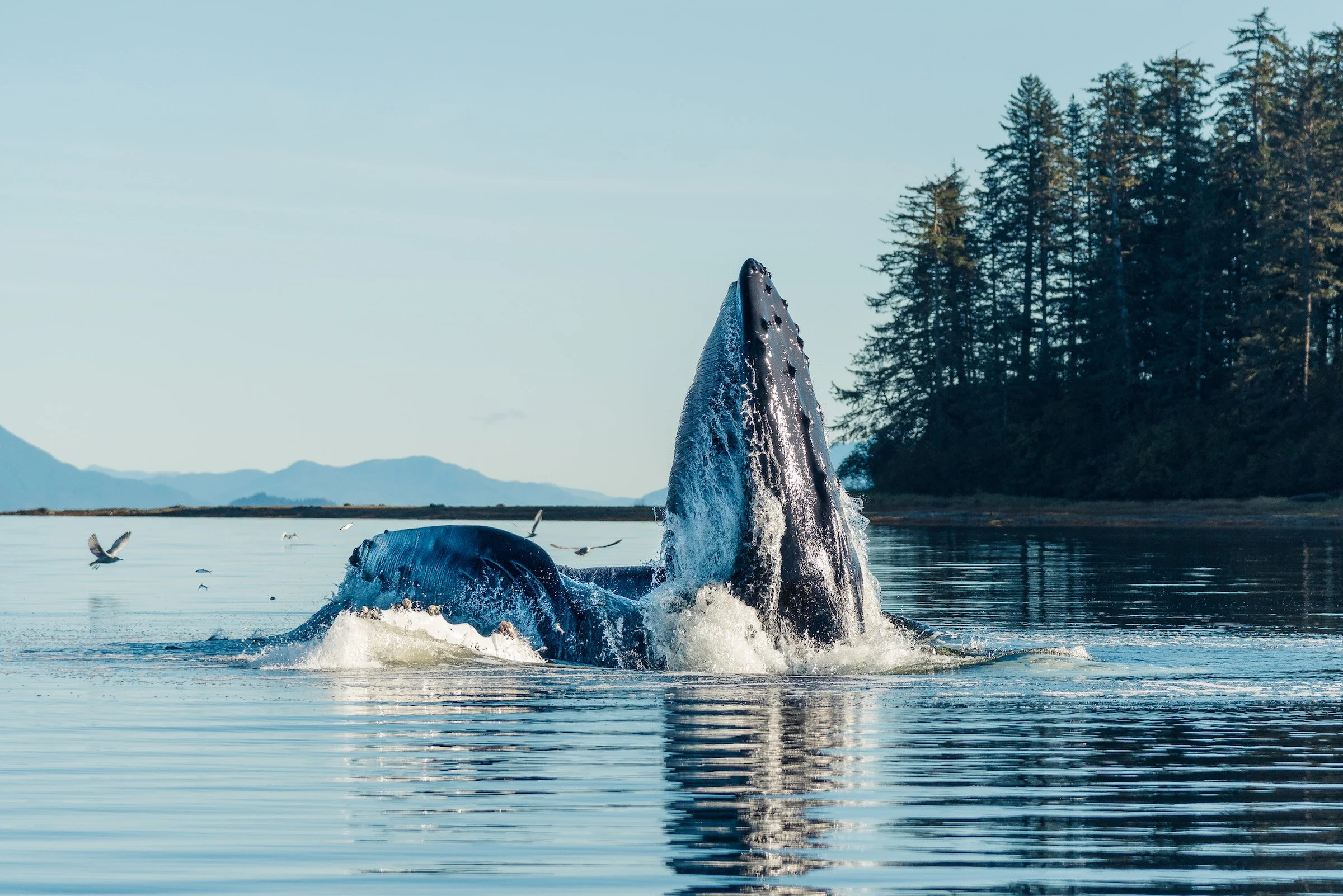
Sitka sits on the outer coast, facing the Gulf of Alaska directly — the only major Southeast Alaska cruise port that does. That geography is the whole argument. Humpbacks feeding in Sitka Sound are not confined to a channel; they move across open marine water studded with islands, and boats reach them without a highway leg. In Juneau, the animals gather reliably in Auke Bay and Favorite Channel, but reaching that water means a coach ride from the downtown docks first. The honest framing of sitka or juneau for whale watching is a trade between predictability and pressure. Juneau's protected inside waters produce dense, dependable bubble-net feeding aggregations, and operators there run high volume — which also means a crowded viewing perimeter, with several hulls converging on the same blow. Sitka Sound sees fewer boats on the water at once. Sea otters, Steller sea lions, and bald eagles along the shoreline rocks are routine sightings rather than bonuses, and Mount Edgecumbe stands on the horizon behind the spouts. The cost of that openness is swell: exposed water moves more than a channel does, and passengers prone to seasickness feel it. Cruise logistics shape the decision as much as biology. Sitka's tender and lightering arrangement compresses the shore window, so a Sitka whale watching tour is built tight — less transfer, more time actually alongside animals. Juneau's berthing is simpler but the excursion absorbs road time at both ends. Independent operators in both ports run smaller vessels than the ship-sold coaches, with hydrophones aboard for listening to feeding calls. Access itself costs nothing. Sitka Sound is public water at Sitka, AK 99835, open around the clock — the fee a visitor pays goes to the vessel and the naturalist aboard it, not to any gate. Anyone comparing sitka or juneau for whale watching should therefore compare boats and captains, not admission. Confirm your ship's actual all-aboard time against the sailing you want, then book directly rather than waiting for a gangway pitch, because small-boat capacity in Sitka fills faster than Juneau's. Detailed timing, transfer routes, and packing notes live in the dedicated sections further down this sitka or juneau for whale watching guide. Read those before you reserve, and check https://www.visit-sitka.com for current port information.
“The fee a visitor pays goes to the vessel and the naturalist aboard it, not to any gate.”
Sitka or Juneau for Whale Watching: How to Decide
Cruise passengers often choose between Sitka and Juneau for whale watching based on the balance between open-ocean encounters and sheltered inland passages. Understanding the differences in marine environments helps align your excursion with your travel priorities.
| Sitka Juneau | Open-ocean focus, true Protected waters, easier | |
|---|---|---|
| Environment | Open Pacific coastal waters | Sheltered island channels |
| Typical Crowd Density | Low to moderate vessel traffic | High vessel concentration |
| Travel Time to Sightings | 15 to 30 minutes | 30 to 45 minutes |
| Wildlife Variety | Humpbacks, sea otters, brown bears | Humpbacks, bald eagles, seals |
| Port Atmosphere | Historic, relaxed, maritime | Busy, cruise-hub, commercial |
Verdict: Choose Sitka for a quieter, wilder experience on the open ocean, or select Juneau for more frequent sightings in calm, protected inland waters.
Best Time for Sitka or Juneau for Whale Watching
The prime window for whale watching in Sitka occurs from July through September when humpback whales are most active in the region. Visitors should prioritize the best arrival window of 08:00–12:00, as morning hours typically offer calmer waters and better lighting for photography.
July–August
High seasonal cruise traffic50°F to 65°F; peak activity
Peak whale activity coincides with warmer, stable weather patterns.
September
Moderate45°F to 58°F; cooling trends
Whales remain active as they feed before migration.
Morning hours
Low daily congestion—
Morning waters are calmest, providing superior conditions for spotting marine life.
Verdict: The best time for whale watching in Sitka is during the morning hours from July through September.
Getting to Your Excursion: Sitka or Juneau for Whale Watching
Whale watching excursions in Sitka primarily depart from the Crescent Harbor and Old Sitka Dock areas. Access to these departure points is straightforward for cruise passengers, as most ships offer shuttle services directly to the town center near the harbor.
Cruise Ship Dock to Crescent Harbor
Harbor drive to excursion docks
Local transit to Sitka Sound
Preparation Checklist for Sitka or Juneau for Whale Watching
Cruise passengers weighing Sitka against Juneau should sort these items out before the ship docks, since ship-day windows are short and Sitka Sound tours depart on schedule.
-
Confirm your ship's docked hours — Tender ports and shore-power berths change how much of the 08:00–12:00 window you actually get.
-
Carry photo ID and cruise card — Both are required to reboard and are often checked at the harbour before boarding a vessel.
-
Save the operator's contact offline — Alaskan cell coverage drops outside town, so a screenshot of your confirmation beats a live lookup.
-
Pack waterproof outer layers — Sitka Sound is open ocean water and spray reaches the deck even on calm mornings.
-
Bring binoculars and a zoom lens — Vessels hold legal distance from whales, so most sightings sit well beyond phone-camera range.
-
Take motion sickness tablets early — They work best an hour before departure, not once swell picks up past the breakwater.
-
Note the meeting point address — Sitka Sound, Sitka, AK 99835, USA — check the exact dock on https://www.visit-sitka.com.
-
Wear non-slip closed shoes — Wet aluminium decks and boarding ramps make sandals a genuine hazard.
Check availability
Frequently Asked Questions About Sitka or Juneau for Whale Watching
Everything you need to know about sitka or juneau for whale watching